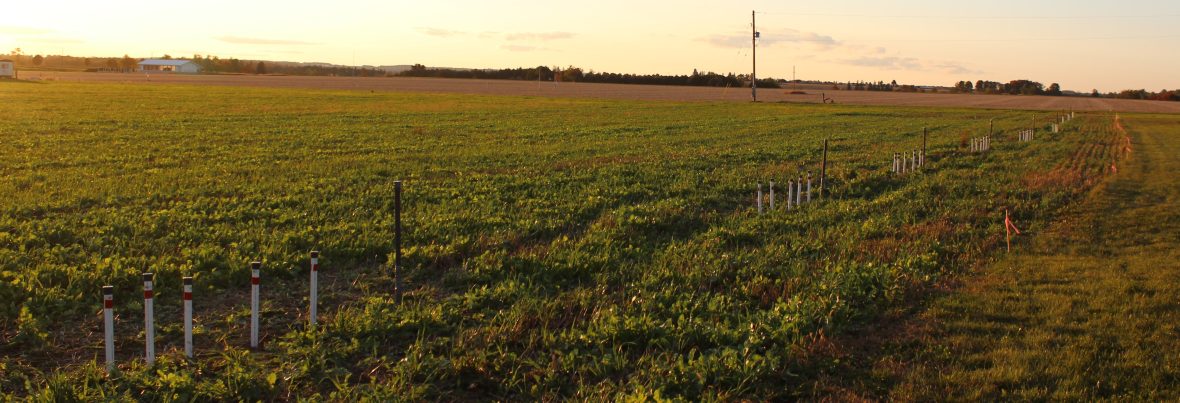
When drilling at the Gault Nature Reserve to install shallow groundwater wells, we encountered some rocky surprises!
LAB NEWS
ECOHYDROS hosts a hands-on learning experience at Montreal’s EURÊKA! Festival | ECOHYDROS organise un atelier d’apprentissage interactif au festival EURÊKA! à Montréal
ECOHYDROS guided young scientists through a water quality testing procedure. | ECOHYDROS a guidé de jeunes scientifiques à travers une procedure de test de la qualité de l'eau.
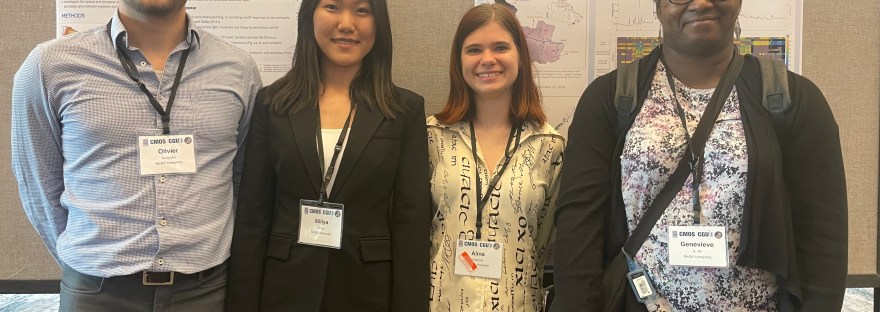
ECOHYDROS Lab at CGU 2025 | Le laboratoire ECOHYDROS à la CGU 2025
By / Par Alina Kostyuk Members of the Ecohydros lab got the chance to attend the Canadian Geophysical Union in May 2025 in Saskatoon. Alina and Liya presented preliminary findings from their master's projects, while Olivier presented the results of his undergraduate research project. Genevieve Ali was invited to give the Woo lecture. Les membres… Continue reading ECOHYDROS Lab at CGU 2025 | Le laboratoire ECOHYDROS à la CGU 2025
Sampling Québec Rivers for Science Outreach Activities | Échantillonnage de plusieurs rivières québécoises pour des activités interactives de vulgarisation scientifique
On May 13th, 2025, a team of ECOHYDROS students visited five rivers between Montréal and Trois-Rivières. The team collected water samples from the Assomption, Yamachiche, Nicolet, Saint-François, and Richelieu rivers in preparation for hosting interactive science-outreach activities.
24 hours of Science at the Gault Nature Reserve | 24 heures de science à la réserve naturelle de Gault
by | par Alina Kostyuk translation by | traduction par Florence Dancose Une version française de cet article suit la version anglaise. On May 3rd, 2025, our Ecohydrological Systems lab group participated in the “24 Hours of Science” event held at the Gault Nature Reserve. This was part of a province-wide celebration of science and… Continue reading 24 hours of Science at the Gault Nature Reserve | 24 heures de science à la réserve naturelle de Gault
New and departing group members: May 2025 | Nouvelles additions au et départ du groupe : Mai 2025
In anticipation of yet another busy summer in 2025, with not only lots of field installations to complete but also science outreach activities to plan and leas, we made a call for 2 to 4 undergraduate research assistants. As of this month, we are welcoming Liam Greig, Cléa Philips-Kennedy and Florence Dancose are joining the… Continue reading New and departing group members: May 2025 | Nouvelles additions au et départ du groupe : Mai 2025
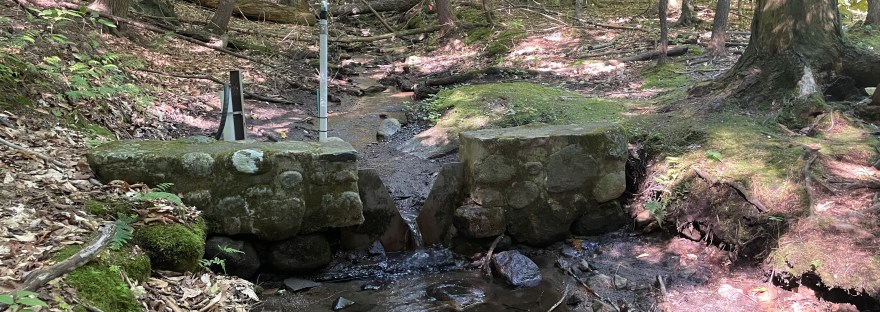
Research project: What happens to a stream during rain? | Projet de recherche : Que se passe-t-il dans un cours d’eau après un événement de pluie ?
By | par Alina Kostyuk Une version française de cet article suit la version anglaise. My master’s research project is about what happens to a catchment when rain brings in new water, and how this new water travels through the system. A catchment is a geographic area where all water, both on the surface and… Continue reading Research project: What happens to a stream during rain? | Projet de recherche : Que se passe-t-il dans un cours d’eau après un événement de pluie ?
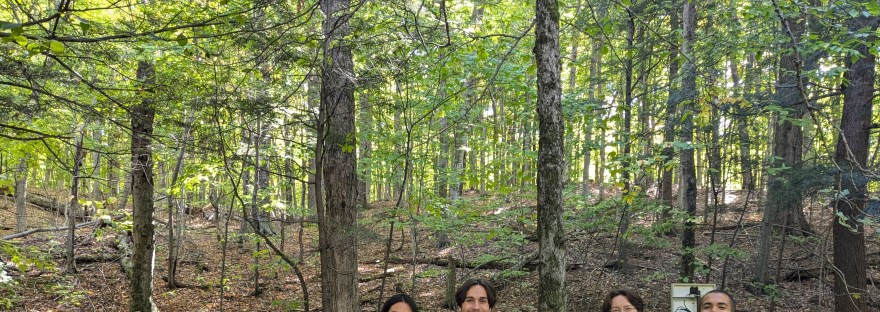
Hydrology Outreach at Gault’s Biodiversity Festival | Sensibilisation sur l’hydrologie au festival de la biodiversité à Gault
This past weekend, ECOHYDROS was invited to present their research at Gault Nature Reserve's Biodiversity Festival.
Extreme Rain: Tropical Storm Debby | Précipitation extrême: la tempête tropicale Debby
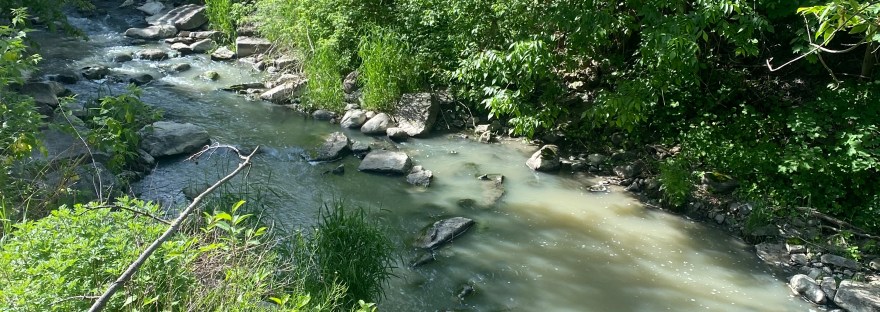
by | par: Alina KostyukTranslation by | traduit par: Florence Dancose Une version française de cet article suit la version anglaise. With the onset of climate change and global warming, extreme weather events, especially those relating to rain patterns, are a major concern. This is because warm air can hold more moisture than cold air,… Continue reading Extreme Rain: Tropical Storm Debby | Précipitation extrême: la tempête tropicale Debby
Tracking Fecal Coliforms: How Human Activities Affect Water Quality | Étudier les coliformes fécaux: l’effet des activités humaines sur la qualité de l’eau
This summer, I am studying the impact of extreme weather events on the water quality of Ours Creek, an important tributary of the Hurons River. Located in Montérégie, the river is labelled as having a very bad water quality in the province of Québec. I am analyzing 44 different water quality parameters, including total dissolved phosphorus, trace metals, and isotopic signatures, to better understand contaminant transport mechanisms. One of the parameters I’m focusing on is the concentration of fecal coliforms in the water, which serves as an indicator of contamination from fecal matter such as manure and sewage.

